Professional Tree Pruning and Trimming for Homes, Commercial Properties & Landscapes
Looking for professional tree pruning and trimming Melbourne services to manage overgrown, damaged or poorly shaped trees? Tree Removal Werribee provides practical tree pruning and trimming solutions for residential homes, rental properties, commercial sites and landscaped properties across Werribee and Melbourne’s western suburbs.
Regular tree pruning can help manage excessive growth, remove damaged or unwanted branches, improve clearance around buildings and create a more balanced appearance. The right pruning approach depends on the tree species, size, condition, branch structure, surrounding environment, and the reason for the work.
Professional pruning is more than random branch cutting. Poorly selected cuts can affect the shape, structure and future development. Our approach considers which branches need attention, how much to remove, and how the tree interacts with nearby homes, fences, driveways, gardens and outdoor areas.
Whether you need a single backyard tree trimmed, branches cleared away from your house, or ongoing maintenance for multiple trees, we can plan the work around your property.
What Is Professional Tree Pruning and Trimming in Melbourne?
Professional tree pruning and trimming involves selectively removing branches or growth from a tree to manage its structure, size, appearance, clearance or condition.
Depending on the tree and the purpose of the work, pruning can involve removing dead branches, reducing excessive growth, clearing limbs away from structures, thinning selected parts of the canopy, improving shape or managing branches that interfere with access and outdoor areas.
Tree trimming is often used as a broader term for maintaining the appearance and size. At the same time, trees require pruning, which usually involves more deliberate branch selection based on structure and specific tree-management objectives.
At Tree Removal Werrgoal, the objective is not to remove amounts of growth. The pruning method should match the tree, its surroundings and the reason maintenance is required.
Tree Pruning Services
Types of Tree Pruning and Trimming Services in Melbourne
General Tree Pruning
General tree pruning suits trees that need routine maintenance without major structural changes.
The work may involve removing unwanted branches, improving clearance, reducing minor overgrowth and maintaining a more controlled overall shape. This type of pruning can be useful for established backyard trees, garden trees and trees that have gradually grown beyond the space originally available to them.
Deadwood Removal
Dead or declining branches can remain within a tree canopy even while the rest of the tree continues growing.
Deadwood removal focuses on identifying and removing dead branches where appropriate. This may improve the tree's appearance and reduce loose or deteriorating material within the canopy.
The amount of deadwood present can vary significantly depending on tree age, species, previous damage and environmental conditions.
Crown Thinning
Crown thinning involves selectively removing some internal or secondary branches while maintaining the tree's general size and character.
The purpose is not to strip the canopy. Instead, selected growth may be reduced to create a less crowded structure and improve the overall balance of branches.
The suitability of crown thinning depends on the tree species, structure and existing canopy density.
Crown Reduction
Some trees become too large for their surroundings but may not require complete removal.
Crown reduction involves selectively reducing the overall height or spread of suitable parts of the canopy. This can help manage trees growing close to buildings, neighbouring properties, outdoor areas or other structures. Plan reductions around suitable branch unions rather than simply cutting every branch back to the same height.
Crown Lifting
Low branches can interfere with driveways, paths, lawns, gardens, vehicles and pedestrian access.
Crown lifting involves selectively removing or shortening lower branches to create additional clearance beneath the canopy.
The appropriate amount of clearance depends on the tree, its age, surrounding property and how the space below the tree is used.
Structural Pruning
Structural pruning focuses on the arrangement and development of branches within the tree.
It can involve managing competing branches, poorly positioned growth or sections that may benefit from selective correction. Structural pruning is particularly useful when you need to consider the tree's long-term form rather than simply reducing its current size.
Overgrown Tree Trimming
Trees that have not been maintained for several years can develop dense, extended or uneven growth.
Overgrown tree trimming can help bring the canopy under better control while considering how much can reasonably be removed during one maintenance session.
The goal is to manage the tree progressively rather than removing excessive growth without considering its structure.
Pruning Configurations
Tree Pruning Options for Different Properties
Small Tree Pruning
Small garden trees, ornamental trees and younger trees may require straightforward maintenance, but careful branch selection is still important.
Pruning can help manage shape, remove unwanted growth and prevent branches from becoming problematic as the tree develops.
Large Tree Pruning
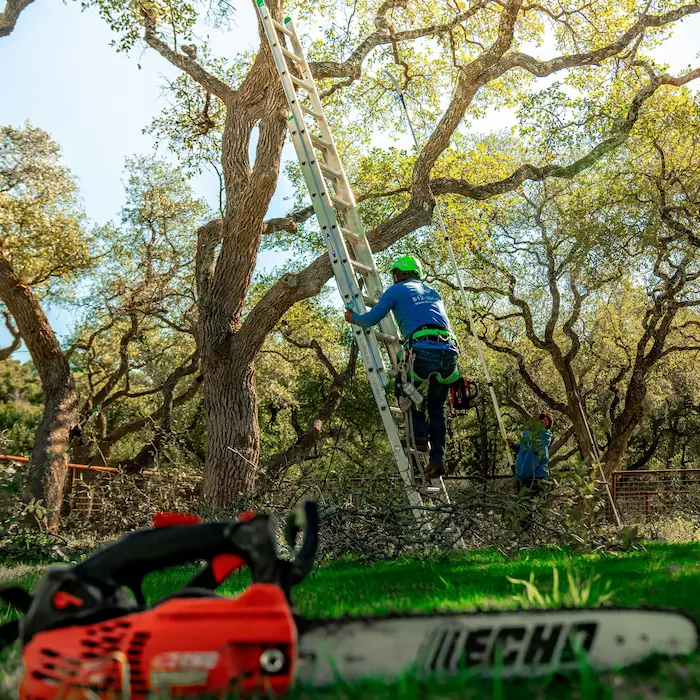
Large mature trees generally require more detailed planning because branches may be heavier and harder to access.
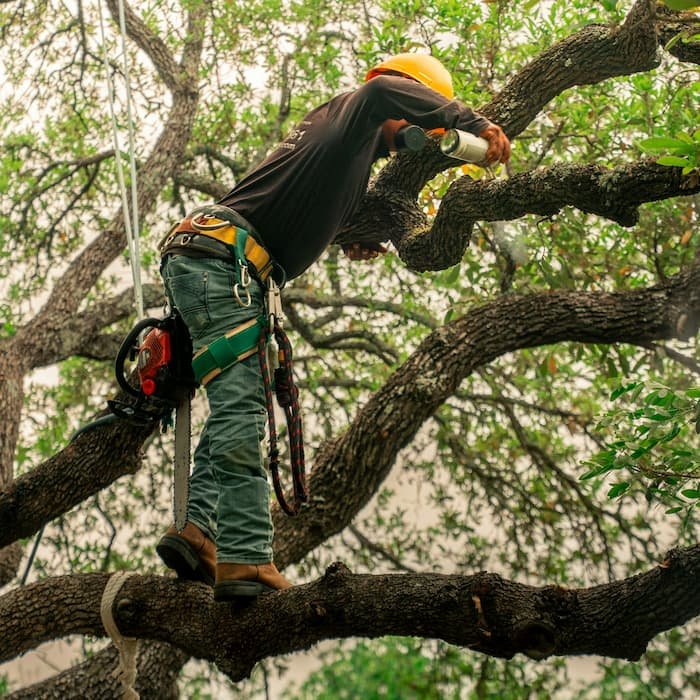
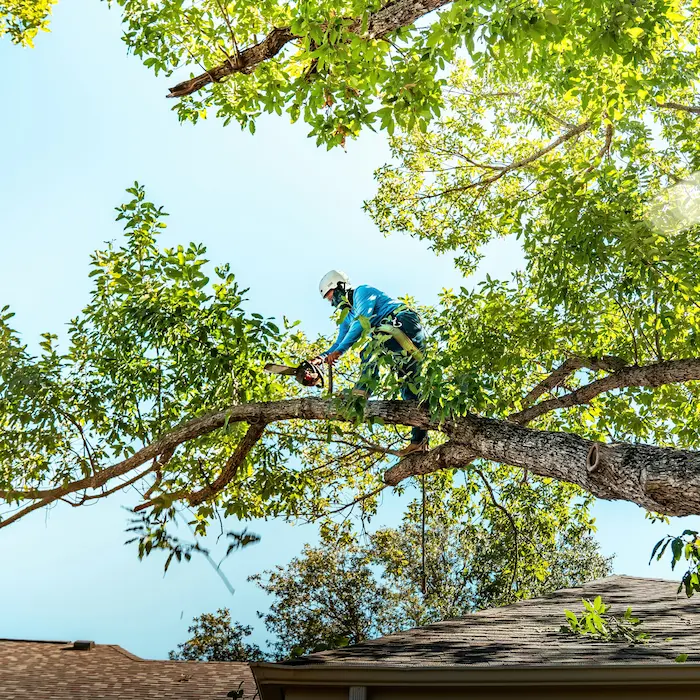
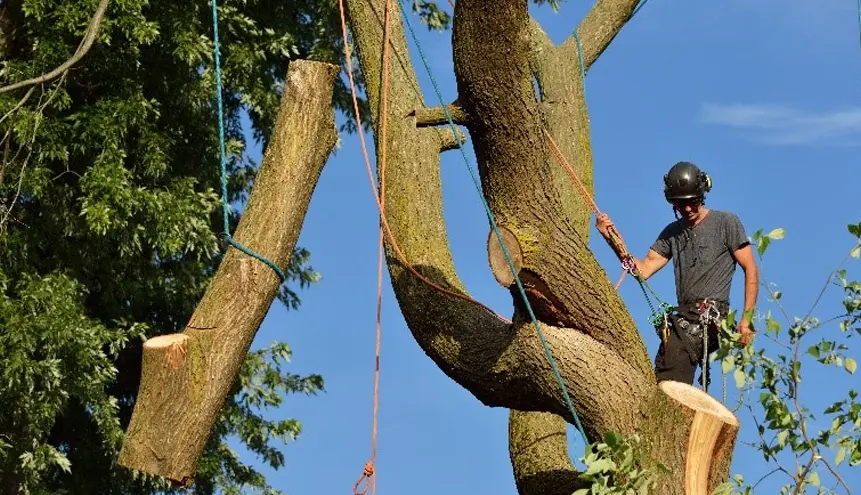
Maintenance can involve climbing techniques, controlled branch removal, and specialised equipment depending on the tree's height, canopy spread, and surrounding structures.
Tree Trimming Near Houses
Branches growing toward roofs, gutters, windows, or exterior walls can create maintenance concerns around a property.
Selective trimming can improve clearance between the tree and nearby structures without removing the entire tree; the required amount depends on the tree's growth and how it grows.
Tree Trimming Near Fences and Boundaries
Trees growing along boundaries may extend across fences, neighbouring properties or narrow side areas.
Pruning can help manage selected branches while maintaining a more controlled canopy around the available space.
Driveway and Pathway Clearance
Low branches can gradually extend over driveways, paths and access areas.
Selective pruning can improve usable clearance for people and vehicles while maintaining the tree where appropriate.
Branch Management & Tree Finish
Tree Structure, Canopy Management & Pruning Outcomes
Choosing the right pruning approach is an important part of achieving a safe, healthy, and visually balanced tree. Professional tree pruning focuses on understanding the tree’s natural structure, selecting the right branches, and creating a result that supports both appearance and long-term growth.
Pruning Approach
Characteristics
Typical applications
Considerations
Branch Selection
Professional pruning begins by identifying which branches require attention based on their condition, position, and purpose within the tree structure.
Used for removing dead, damaged, weak, or unwanted branches while keeping healthy parts of the tree intact.
Removing branches without proper assessment can affect the tree’s natural balance and may create unnecessary stress or poor growth patterns.
Canopy Management
Canopy management focuses on maintaining a balanced distribution of branches, foliage, and overall tree shape.
Suitable for trees that have become too dense, uneven, or overextended in certain areas.
The goal is to improve structure and appearance while working with the tree’s natural growth pattern rather than forcing an unnatural shape.
Clearance Management
Pruning can help maintain safe clearance between tree branches and nearby structures or usable areas.
Commonly required for branches growing near roofs, driveways, fences, pathways, and outdoor living spaces.
Targeted pruning removes problem branches while avoiding unnecessary reduction of the entire canopy.
Deadwood & Hazard Branch Removal
Removes branches that are damaged, unhealthy, or at risk of falling.
Used to improve safety around homes, gardens, public areas, and high-traffic spaces.
Regular assessment helps identify potential hazards before branches become a larger safety concern.
Tree Shape & Appearance
A well-planned pruning project improves the tree’s overall appearance while maintaining its natural form.
Suitable for residential gardens where homeowners want healthier and better-maintained trees.
The final result should look natural and balanced, with clean cuts and proper spacing between branches.
Planning the Pruning
Tree Species and Growth Habit
Plan tree pruning around the species, growth pattern, and surrounding property to achieve safe and effective results.
Tree Species and Growth Habit
Different trees naturally grow in different forms.
Some species develop broad spreading canopies, while others grow more upright or produce dense internal branching. Understanding the natural growth habit helps determine how to maintain the tree without creating an unnatural appearance.
Tree's Size
The tree's height and size affect the equipment, access, planning, and working space required.
Large mature trees can involve considerably more planning than smaller ornamental trees.
Branch Structure
The arrangement of branches affects where cuts can reasonably be made.
Before pruning begins, the canopy should be examined for dead branches, crossing growth, competing stems, extended limbs and sections that may require specific attention.
Property Access
Access can affect how pruning work is completed.
Narrow side passages, fencing, buildings, established gardens and neighbouring properties can all influence how equipment is positioned and how removed branches are taken away from the work area.
Nearby Structures
Homes, garages, sheds, fences, driveways and outdoor living areas need to be considered when selecting pruning techniques.
Branches growing over or beside structures may require controlled removal rather than being allowed to fall freely.
Long-Term Tree Management
Pruning should not only address what the tree looks like today. Where appropriate, decisions can also consider how remaining branches are likely to develop and whether future maintenance requirements can be reduced through better branch selection.
The aim is to balance tree health, appearance, safety, maintenance needs and the character of the surrounding property.
Step by Step
Our Tree Pruning and Trimming Process in Melbourne
1
Initial Consultation
We begin by discussing the tree, its location, and why you are considering pruning.
We may discuss whether the concern involves overgrowth, dead branches, clearance, appearance, property access or another tree-management issue
2
Tree Inspection
We assess the tree to understand its size, condition, canopy structure, branch arrangement, and relationship to surrounding areas.
This pruning scope is planned around the actual tree rather than applying a standard approach.
3
Pruning Recommendation
After assessing the tree and your objectives, we select an appropriate pruning approach.
The work may involve general maintenance, deadwood removal, crown lifting, selective reduction or another suitable technique depending on the situation.
4
Site Preparation: We assess the site and consider the surroundings before cutting begins.
Equipment access, gardens, outdoor furniture, pathways, nearby structures and branch-removal routes may all affect preparation.
5
Selected Branch Removal
Branches requiring attention are removed progressively using methods suited to their size, height, and location.
Where branches are positioned over sensitive areas, additional control may be required during removal.
6
Canopy Adjustment
The remaining canopy is reviewed as the work progresses to maintain an appropriate balance and avoid unnecessary removal.
7
Branch Processing
We can process removed branches and smaller tree material according to the agreed cleanup scope.
8
Site Clean-Up
We clear the work area of agreed pruning debris so the surrounding property is left organised after the project.
9
Final Review
We conduct the final review to ensure the intended pruning objectives have been addressed.
10
Future Maintenance Guidance
Where relevant, discuss the next likely maintenance stage based on the tree's condition, growth, and property requirements.
Professional tree pruning can require different equipment depending on tree size, branch location and property access.
Pruning Saws
Pruning saws remove suitable branches with greater control than equipment designed for heavier tree disSelect differently.
Different cuts based on branch size and working position.
Chainsaws
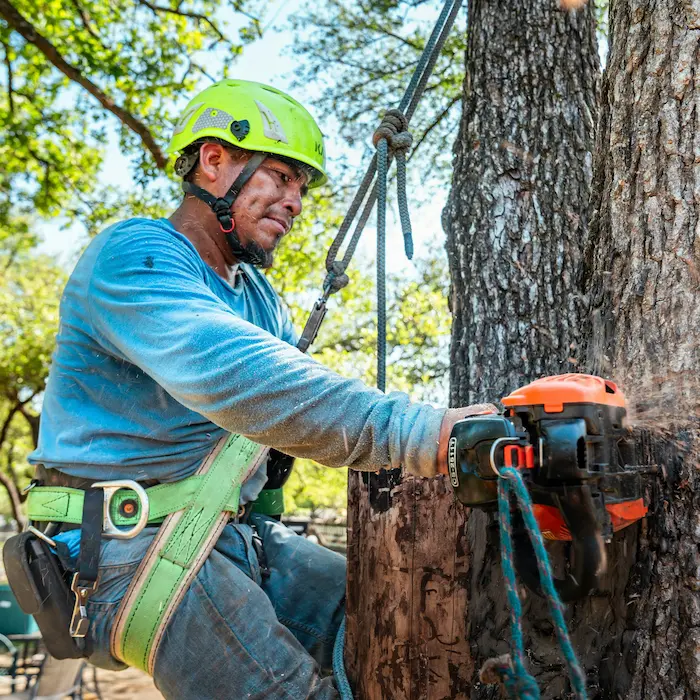
Chainsaws may be required for larger branches that are inefficient to cut using smaller hand tools.
Their use depends on branch diameter, access and the type of pruning being carried out.
Pole Pruning Equipment
Pole pruning equipment can provide access to selected higher branches where the working conditions and branches allow, supporting targeted maintenance without requiring access to every part directly.
Climbing Equipment
Larger trees may require climbing equipment when branches cannot be safely or effectively reached from ground level.
The selected method depends on the tree structure and surrounding site.
Ropes and Rigging
Ropes and rigging can help control removed branches in areas where surrounding buildings, gardens, or other features need consideration.
Wood Chippers
Branches removed during pruning can create a significant amount of green waste.
Wood chippers can process suitable branches into more manageable material as part of the process.
Controlled Branch Removal
Controlled removal techniques may be used for larger or awkwardly positioned branches that require careful, controlled removal.
Selective Cutting
Effective pruning involves selecting specific branches rather than removing growth uniformly across the entire canopy.
This allows the work to address the actual reason for pruning while retaining appropriate sections of the tree.
Local Coverage
Tree Pruning and Trimming Across Werribee & Melbourne’s Western Suburbs
We work across Werribee and Melbourne's western suburbs.
Tree Pruning and Trimming Cost in Melbourne — What Should You Expect?
Tree pruning and trimming costs vary because every tree has different requirements. The final price depends on factors such as tree size, height, branch condition, access, pruning goals, and the level of equipment needed to complete the work safely.
Tree Pruning Project Type
Typical Considerations
Small garden tree with easy access
Usually requires less time, equipment, and preparation compared with larger trees.
Large mature tree with high branches
May require specialised equipment, climbing techniques, and additional safety measures.
Complex pruning near structures
Higher complexity due to careful branch removal around homes, fences, power lines, or other obstacles.
A small tree requiring light trimming in an open garden area will generally involve a different scope compared with a large mature tree with extensive canopy growth, difficult access, or branches extending over nearby structures.
These pricing factors should be treated as general guidance only. Each tree pruning and trimming project requires an individual assessment to determine the safest and most suitable approach.
What Is Normally Included?
A tree pruning and trimming service may include:
Assessment of tree structure and pruning requirements
Removal of dead, damaged, or unwanted branches
Canopy shaping and selective branch reduction
Clearance pruning around buildings, pathways, and outdoor areas
Safe use of professional pruning equipment
Branch processing and green waste clean-up where agreed
Why We Quote Each Tree Individually
A small residential tree with minor overgrowth may require simple trimming, while a large established tree with dense branches, restricted access, or safety concerns may require more planning, specialised equipment, and additional labour.
Factors such as tree species, growth habit, branch condition, location, access limitations, and desired outcome all influence the time and techniques required for successful pruning.
Tree Pruning and Trimming Melbourne Frequently Asked Questions
What is the difference between tree pruning and tree trimming?
Tree trimming commonly refers to general maintenance and control of overgrown trees. Pruning usually refers to more selective branch removal based on structure, condition, clearance, or specific tree-management objectives.
Customers often use the terms together because they are looking for professional tree maintenance.
Why should trees be pruned?
Trees may be pruned to remove dead or unwanted branches, manage excessive growth, improve clearance, control canopy spread, address structural concerns or maintain a more suitable appearance for the surrounding property.
How often should a tree be pruned?
No single pruning schedule suits every tree.
The appropriate interval depends on species, age, growth rate, condition, location and the type of pruning required.
Can you reduce the height of a tree?
Some trees can be selectively reduced where suitable branch structure allows.
The appropriate method depends on the tree species, existing canopy and amount of reduction being considered.
Can you trim branches growing over my roof?
Branches extending toward or over a roof may be suitable for selective pruning depending on the tree and branch structure. We need to consider texture.
We also consider the surrounding building and available work area before we begin removal.
Can you prune large trees?
Yes. We can prune large trees where appropriate, although their height and branch size may require climbing, rigging, or other specialised equipment.
Can you remove dead branches?
Deadwood removal can be included as part of tree maintenance where dead or declining branches are present within the canopy.
Will pruning make my tree healthier?
Pruning may help manage particular structural, clearance or deadwood issues, but the outcome depends on the condition of the individual tree and the reason for pruning.
Trees with broader health concerns may benefit from a professional assessment before planning work.
Do you remove all the branches after pruning?
Branch processing and site cleanup can be included within the agreed project scope.
The requirements should be confirmed as part of the quotation.
Can pruning save a tree from being removed?
In some situations, pruning may resolve concerns involving overgrowth, clearance or selected damaged branches without requiring complete tree removal.
However, some trees may have conditions that pruning alone cannot address.
Do you prune commercial property trees?
Yes. We provide tree pruning for suitable commercial, rental, industrial, and managed properties, as well as residential homes.
Do you service areas outside Werribee?
Yes. Our tree pruning and trimming services cover Werribee and the surrounding Melbourne western suburbs, including Altona, Laverton North, Altona Meadows, Hoppers Crossing, Point Cook, Tarneit, and Truganina.
Next Step
Ready to Prune or Trim Your Trees in Melbourne?
Overgrown, damaged or poorly positioned branches can affect the appearance and usability of your outdoor space.
Professional tree pruning can help manage canopy growth, improve clearance, remove selected unwanted branches and maintain trees around homes, commercial properties and landscaped areas.
Whether you need routine trimming for a backyard tree, dead branches removed, clearance around a house or more detailed maintenance for a large mature tree, Tree Removal Werribee can assess the situation and recommend an appropriate approach.
We focus on controlled pruning, careful branch selection, suitable equipment and an organised cleanup process.
Tree Removal Werribee
Professional tree pruning and trimming for residential homes, commercial properties, rental properties and landscaped sites throughout Werribee and Melbourne's western suburbs.
Request a Free Quote
Tell us where the tree is located, approximately how large it is, which branches or areas are causing concern, whether the tree is close to buildings or fences and what you would like the pruning work to achieve.
Photos can also help provide initial context about the tree and surrounding property.
Call Our Team
Speak with us about your tree pruning and trimming requirements in Werribee or Melbourne's western suburbs and discuss the next step.
What Happens Next
We review your requirements, assess the tree and surrounding property, identify an appropriate pruning approach and provide a quotation based on the expected scope of work.