A tree that drops a branch or crowds the house does not automatically have to go. Plenty of problem trees can be made safer and more manageable with the right pruning. Others have faults that no amount of pruning can fix. The aim is to find out which one you have before anything is cut.
When pruning is usually enough
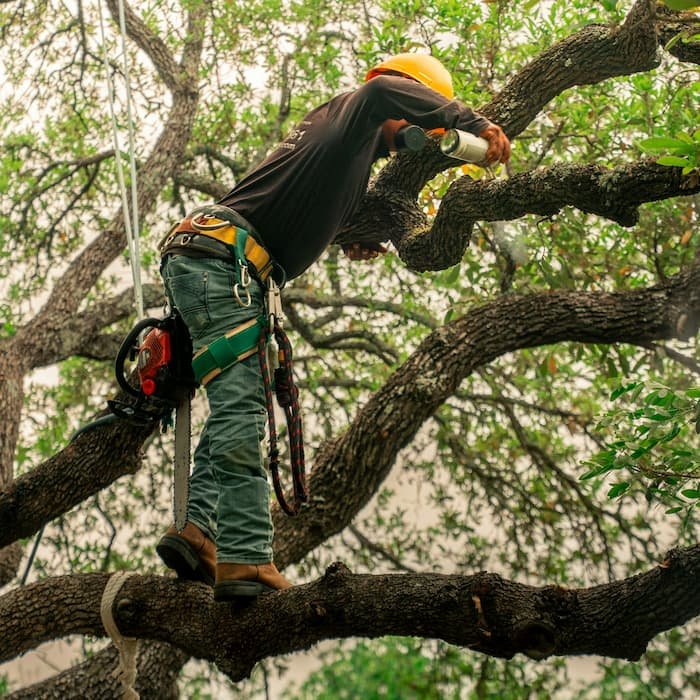
Pruning suits a tree that is fundamentally sound but has a specific problem that can be removed or reduced.
- Dead branches in an otherwise healthy canopy
- Limbs rubbing on a roof, gutter or fence
- Low branches blocking a driveway or path
- Crossing branches that are wearing against each other
- A dense canopy shading a garden or solar panels
- Growth moving towards the service line to the house
Keeping a mature tree preserves shade, habitat and the character of a property. Where a council protects the tree, retention may also be the only option it will approve.
Warning signs that point towards removal
These signs do not automatically condemn a tree, but they are reasons to get it inspected promptly.
- A new or worsening lean, especially after wind or heavy rain
- Soil cracking or lifting on one side of the base
- Large splits in the trunk or at major branch unions
- Mushrooms or other fungi on the trunk or roots
- Hollow sections, soft wood or a large cavity
- Dieback through most of the crown
- Serious root damage from trenching or construction nearby
If a tree has moved suddenly, the ground has lifted around it, or a large limb is hanging, keep people and cars clear and get it assessed urgently. Call 000 if anyone's life is in danger.
Five questions that help you decide
Is the fault in one part or throughout the tree?
A single dead limb can be cut out. Decay through the main trunk or the root system is much harder to manage, because the tree's main support is affected.
What could it hit?
The same defect means something different above a bedroom than it does in the far corner of a large block. Risk combines how likely a failure is with what is underneath.
How much would need to be cut?
Removing too much live canopy at once can stress a tree and leave it with less capacity to recover. If making a tree acceptable would take most of its crown, removal may be the more honest option.
Will the problem come back quickly?
Some jobs are a one-off. Others, such as a fast-growing tree beside a gutter, need repeat visits. Weigh the ongoing cost and disruption against what you gain by keeping the tree.
Is the species suited to the location?
A tree may be healthy and still be in the wrong place. Vigorous roots near drains or paving, or a tree that will outgrow a narrow side yard, can make replacing it with something better suited the sensible long-term choice.
Why topping is not a shortcut
Cutting the whole top off a tree may look like a quick way to make it safer. It often has the opposite effect. Topping leaves large wounds that can decay and encourages a mass of fast new shoots that are weakly attached. Good pruning removes selected branches at suitable points, following Australian Standard AS 4373.
Check permits for either option
Do not assume pruning is permit-free just because the tree stays. Planning controls in Victoria can apply to lopping as well as removal, and councils in Melbourne's west have their own rules for significant trees. Check with your council before work starts on a large or native tree.
If the tree is on a boundary or overhanging from next door, the Victorian Government says you can generally cut back branches that cross your boundary at your own cost. You should not go onto your neighbour's land without permission, you should avoid damaging the tree, and you should first check whether it is protected.
When to get a formal assessment
Most pruning decisions can be made during an on-site inspection. A written assessment is worth considering when the tree is large and close to a building, when neighbours disagree, or when a council or insurer needs evidence. It records what was found and why a particular recommendation was made.
Questions about your own property?
Call Now — +61 483 709 394For a local assessment, explore our Tree Removal or ask about work in Altona Meadows.