People often use these two terms as if they mean the same job, but they leave the ground very different. Grinding takes the stump down below the surface and leaves most of the roots in the soil. Full removal takes out the stump and its main root mass. The right choice depends mostly on what you want to do with that spot next.
What stump grinding involves
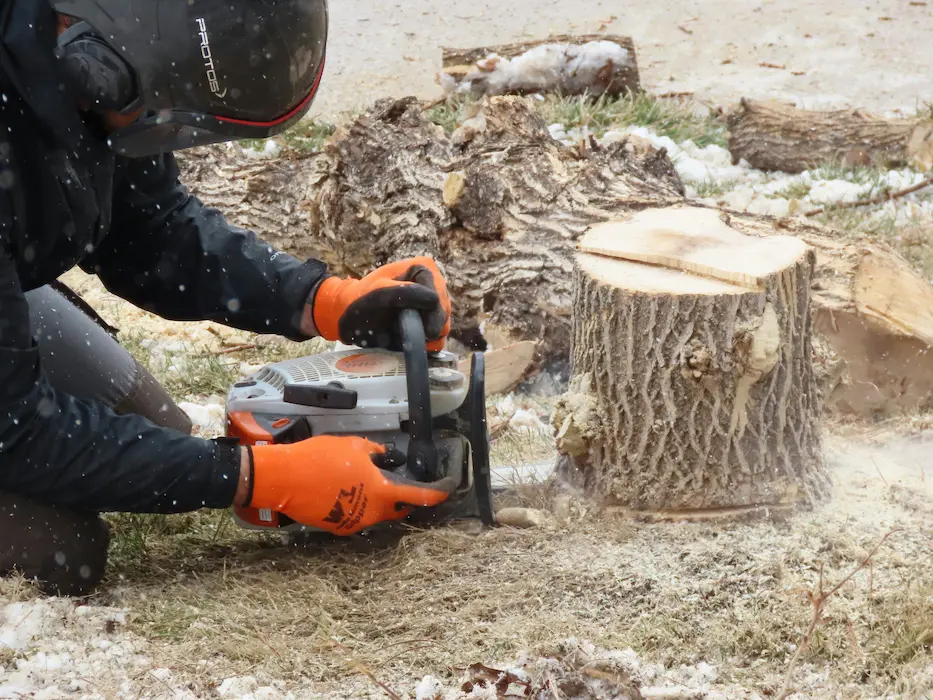
A stump grinder uses a spinning cutting wheel to chew the stump into woodchip, working down below ground level. The larger roots outside the grinding area stay in the soil and break down slowly over time.
Because the stump is cut away where it stands rather than pulled out, the surrounding ground is generally left much less disturbed. Compact machines can also suit properties where access is limited, although gate width still needs checking.
What full stump removal involves
Full removal means digging around the stump, cutting the main roots and lifting out the stump and root ball, usually with an excavator. It leaves a large hole that has to be backfilled and compacted, and it takes more space and machinery. On a finished backyard, that can mean damage to lawn and garden beds along the way.
The main differences
Grinding usually suits
- Returning the area to lawn
- Garden beds with shallow plantings
- Tight backyards and side access
- Stumps close to fences, paths or paving
- Removing a trip hazard or an obstacle for mowing
Full removal usually suits
- Preparing for a slab, footing or major paving
- Land being cleared for building or development
- Sites where large roots would obstruct new services
- Spots where you need clean, deep soil for planting
Think about what comes next
New lawn
Grinding is often all you need. Rake out most of the woodchip and bring in clean topsoil. Fresh woodchip can draw on nitrogen in the soil as it breaks down, so a patch left full of chips may struggle. Allow for some settling and top up the area if it sinks.
A new tree or shrub
Planting right on top of an old stump is rarely ideal. The old roots and woodchip take up space and can make establishment harder. If you can, plant a little to one side. If the exact position matters, remove more of the root material and replace the soil.
Paving, a shed or an extension
Buried timber decays and the ground above it can settle. Tell your builder or landscaper about any stump before work is planned, and follow their engineering advice about what must be removed.
Will the tree grow back?
Some species can send up new shoots from a stump or from roots left behind, and suckering trees are the usual culprits. Tell us what the tree was, or show us a photo from before it was cut. If shoots appear after the job, deal with them early, before they become established.
Check for services before anything is cut
Roots often grow alongside water, gas, stormwater and communications lines, and those lines may not be where you assume. Before You Dig Australia can supply plans of many underground assets, and private pipes on your own block are often not included. Mention any known services, irrigation lines or past plumbing work.
If the tree has not been removed yet, confirm with your council whether a permit applies before work starts. A permit may also carry conditions, such as planting a replacement tree, that affect how you treat the spot afterwards.
Questions to ask before booking
- How far below ground will the stump be taken?
- Are surface roots included, or only the main stump?
- Is woodchip removed or left on site?
- Will the machine fit through my gate?
- Who checks for underground services?
- Is backfilling included if the stump is dug out?
Questions about your own property?
Call Now — +61 483 709 394For a local assessment, explore our Tree Removal or ask about work in Altona Meadows.